Papers
國際期刊論文(*:通訊作者,†:第一作者)
2024
-
 Rapid lightsheet fluorescence imaging of whole Drosophila brains at nanoscale resolution by potassium acrylate-based expansion microscopyXuejiao Tian†, Tzu-Yang Lin, Po-Ting Lin, and 16 more authorsNature Communications, 2024
Taking advantage of the good mechanical strength of expanded Drosophila brains and to tackle their relatively large size that can complicate imaging, we apply potassium (poly)acrylate-based hydrogels for expansion microscopy (ExM), resulting in a 40x plus increased resolution of transgenic fluorescent proteins preserved by glutaraldehyde fixation in the nervous system. Large-volume ExM is realized by using an axicon-based Bessel lightsheet microscope, featuring gentle multi-color fluorophore excitation and intrinsic optical sectioning capability, enabling visualization of Tm5a neurites and L3 lamina neurons with photoreceptors in the optic lobe. We also image nanometer-sized dopaminergic neurons across the same intact iteratively expanded Drosophila brain, enabling us to measure the 3D expansion ratio. Here we show that at a tile scanning speed of 1 min/mm^3 with 10^12 pixels over 14 hours, we image the centimeter-sized fly brain at an effective resolution comparable to electron microscopy, allowing us to visualize mitochondria within presynaptic compartments and Bruchpilot (Brp) scaffold proteins distributed in the central complex, enabling robust analyses of neurobiological topics.
-
 Systematic measurement and calibration approach for mechanical properties of polymer thin film materialsYan-Ting Lin†, Shao-Hong Liao, Yi-Chian Tsai, and 5 more authorsJournal of Mechanics, 2024
This study investigates the mechanical properties of pressure-sensitive adhesive (PSA) and PSA blended with polyethylene terephthalate (PET) film (PBP) through a series of mechanical tests. The combination of a linear-elastic and viscoelastic material model was employed and calibrated to accurately characterize their mechanical behavior. The tensile test and dynamic mechanical analysis (DMA) yielded contrasting results regarding the elastic properties of the two polymer thin films. The experimental data revealed that Young’s modulus of PBP is significantly higher than that of PSA, whereas the shear modulus of PBP is notably lower than PSA. This behavior can be attributed to the sandwich structure of the PBP composite, where the PSA and PET components interact in different configurations either in parallel or in series during the tensile test and DMA, respectively. This paper presents a systematic approach for the precise and efficient application of material models for PSA and PBP, providing valuable insights for future use in various composite polymer film adhesives. Comprehensive calibration and finite element analysis were conducted for both PSA and PBP materials. Based on these experimental findings, we propose a systematic method for measuring and calibrating the mechanical properties of thin film composite materials. This method offers a reliable reference for future engineering applications, as it can be applied to other material systems to expedite the development process.
2022
-
 Revealing anisotropic elasticity of endothelium under fluid shear stressPing-Liang Ko†, Chien-Kai Wang, Heng-Hua Hsu, and 2 more authorsActa Biomaterialia, 2022
Endothelium lining interior surface of blood vessels experiences various physical stimulations in vivo. Its physical properties, especially elasticity, play important roles in regulating the physiological functions of vascular systems. In this paper, an integrated approach is developed to characterize the anisotropic elasticity of the endothelium under physiological-level fluid shear stress. A pressure sensor-embedded microfluidic device is developed to provide fluid shear stress on the perfusion-cultured endothelium and to measure transverse in-plane elasticities in the directions parallel and perpendicular to the flow direction. Biological atomic force microscopy (Bio-AFM) is further exploited to measure the vertical elasticity of the endothelium in its out-of-plane direction. The results show that the transverse elasticity of the endothelium in the direction parallel to the perfusion culture flow direction is about 70% higher than that in the direction perpendicular to the flow direction. Moreover, the transverse elasticities of the endothelium are estimated to be approximately 120 times larger than the vertical one. The results indicate the effects of fluid shear stress on the transverse elasticity anisotropy of the endothelium, and the difference between the elasticities in transverse and vertical directions. The quantitative measurement of the endothelium anisotropic elasticity in different directions at the tissue level under the fluid shear stress provides biologists insightful information for the advanced vascular system studies from biophysical and biomaterial viewpoints.
-
 Identifying distinct oxygen diffusivity through type I pneumocyte-like cell layers using microfluidic deviceYi-Chung Tung†, Chien-Kai Wang†, Yung-Kang Huang†, and 6 more authorsTalanta, 2022
Oxygen is necessary for cellular respiration in aerobic organisms. In animals, such as human, inhaled oxygen moves from the alveoli to the blood through alveolar epithelium into pulmonary capillaries. Up to now, different studies have been reported to examine experimental oxygen diffusivity for simple membrane or single-celled organisms; however, devices capable of precisely characterizing oxygen transportation through cell layers with dimensions similar to their physiological ones have not been developed. In this study, we establish an integrated approach exploiting a multi-layer microfluidic device and relative fluorescence lifetime detection apparatus to reliably measure oxygen diffusivity through a cell layer. In the experiments, different types of cells, including A549 and 3T3 cell lines, lung stem/progenitor cells, and the differentiated type I pneumocyte-like cells, are used to form cell layers within the devices for their oxygen diffusivity evaluation. A distinct facilitated oxygen transportation behavior of the differentiated type I pneumocyte-like cells that has never been discussed before is identified using the approach. The study offered a new in vitro approach to evaluate the oxygen diffusivity across cell layers in a microfluidic device and open a door to construct more physiologically meaningful in vitro model system to study respiratory systems.
2021
-
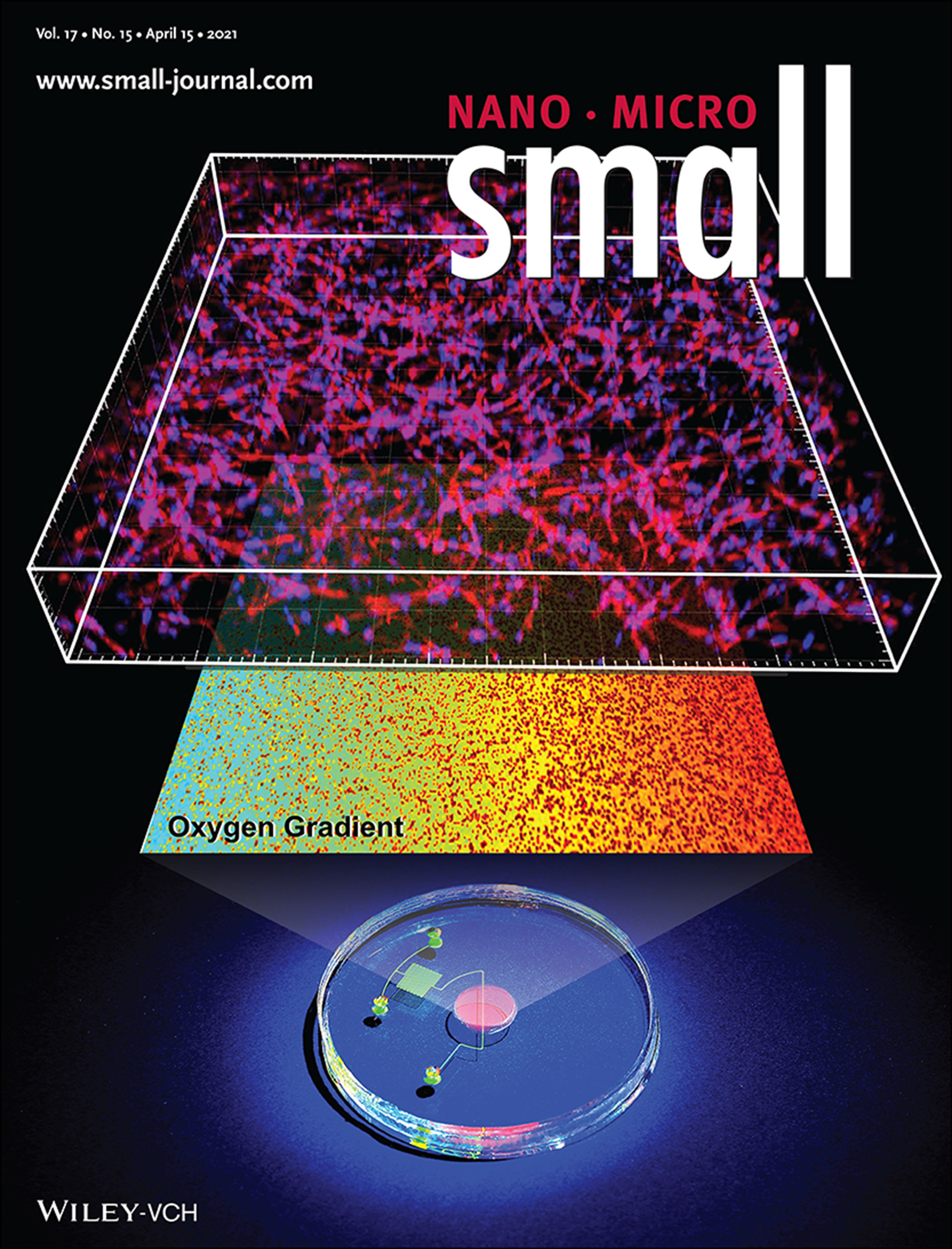 Study 3D endothelial cell network formation under various oxygen microenvironment and hydrogel composition combinations using upside-down microfluidic devicesHeng-Hua Hsu†, Ping-Liang Ko, Hsiao-Mei Wu, and 3 more authorsSmall, 2021
Formation of 3D networks is a crucial process for endothelial cells during development of primary blood vessels under both normal and pathological conditions. In order to investigate effects of oxygen microenvironment and matrix composition on the 3D network formation, an upside-down microfluidic cell culture device capable of generating oxygen gradients is developed in this paper. In cell experiments, network formation of human umbilical vein endothelial cells (HUVECs) within fibrinogen-based hydrogels with different concentrations of hyaluronic acid (HA) is systematically studied. In addition, five different oxygen microenvironments (uniform normoxia, 5%, and 1% O2; oxygen gradients under normoxia and 5% O2) are also applied for the cell culture. The generated oxygen gradients are characterized based on fluorescence lifetime measurements. The experimental results show increased 3D cell network length when the cells are cultured under the oxygen gradients within the hydrogels with the HA addition suggesting their roles in promoting network formation. Furthermore, the formed networks tend to align along the direction of the oxygen gradients indicating the presence of gradient-driven cellular response. The results demonstrate that the developed upside-down microfluidic device can provide an advanced platform to investigate 3D cell culture under the controlled oxygen microenvironments for various biomedical studies in vitro.
2020
-
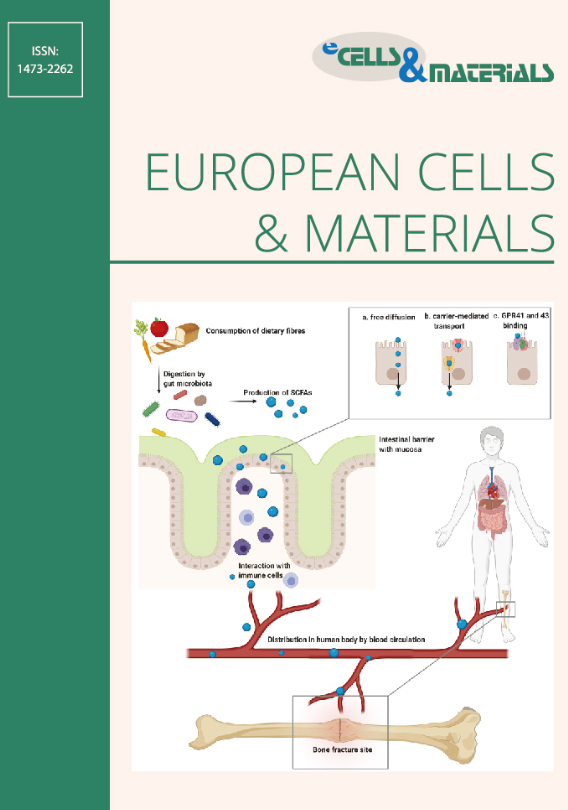 Increased vasculogenesis of endothelial cells in hyaluronic acid augmented fibrin-based natural hydrogels – from in vitro to in vivo modelsH.C. Lin†, C.K Wang, Y.C. Tung, and 2 more authorsEuropean Cells and Materials, 2020
Vascularisation efficiency plays an essential role in the success of bulk transplantation, while biocompatibility and safety are major concerns in clinical applications. Fibrin-based hydrogels have been exploited as scaffolds for their advantages in biocompatibility, degradability and mass transportation in various forms. However, the mechanical strength and degree of vascularisation remain unsatisfactory for clinical usage. An interpenetrating hydrogel was developed by adding hyaluronic acid (HA) to a fibrin-based natural hydrogel. The vasculogenesis of endothelial cells (human umbilical vein endothelial cells, HUVECs) was characterised within the gel using both in vitro and in vivo animal studies. The in vitro vascular morphology analysis showed 17.9% longer mean tube length and 14.3% higher average thickness in 7 d cultivation within the HA-supplemented hydrogel. The in vivo results showed 51.6% larger total tube area, 1.8× longer average tube length and 81.6% higher cell number in the HA-supplemented hydrogel compared to the hydrogel without HA. The experimental results demonstrated better vascularisation and cell recruitment in the HA-supplemented hydrogel. The material properties of the hydrogels were also analysed using atomic force microscopy (AFM). The results revealed 3.7× higher elasticity of the HA-supplemented hydrogel, which provided better mechanical strength and support for easy handling during procedures. With the demonstrated advantages, the developed hydrogels showed promise for exploitation in various practical clinical applications.
2019
-
 Robust topology optimization of solid continua for peak response serviceability to uncertain quasi-static loads with temporal correlationChien-Kai Wang*† and Ping-Liang KoStructural and Multidisciplinary Optimization, 2019
A robust topology optimization methodology for solid continua having peak response serviceability to uncertain quasi-static loads with temporal correlation is developed in this paper. The proposed optimization methodology supplies analytical sensitivity assessment of peak responses of design continua associated with material distributions. In order for the topology optimization results to be validated, statistical investigations are performed to estimate probabilities of failure that fluctuating peak responses of such optimized designs exceed certain specified amounts. The computational results confirm that topological material distributions of optimized solids or structures with maximum peak response serviceability highly depend on temporal correlation degrees of uncertain stationary load sequences of long-term processes. Furthermore, conventional topology optimization of solid continua subjected to deterministic loads is also compared with the aforementioned optimized material distributions regarding uncertain loads. As a consequence, an effective computation framework for solving robust topology optimization problems under loading uncertainty can be established based on the proposed methodology. The robust topology optimization developed in this study thus provides a powerful tool for investigating efficient designs of solids and structures under uncertain loading conditions for fundamental mechanics, applied engineering, and multidisciplinary sciences research.
2018
- Structural optimization with design constraints on peak responses to temporally correlated quasi-static load processesChien-Kai Wang*†, Chang-Min Tsai, Bo-Sen Chuang, and 1 more authorStructural and Multidisciplinary Optimization, 2018
Structural optimization has become a widely used tool for various applications due to its capability of providing design freedom and promise to efficient structures. Current optimization methods are usually utilized for producing optimal structural systems subjected to design constraints under definite static or dynamic load distributions. However, engineering structures may experience randomly fluctuating loads in different physical environments. In this paper, a methodology of structural optimization with constraints on peak system responses to temporally correlated quasi-static load processes is developed. The proposed methodology provides an algorithm for generating structures of the optimal designs with constraints on their extreme responses to such environmental load sequences which have correlation features in the time domain. The computational results confirm that material distributions of optimized structures with peak response constraints highly depend on correlation levels of quasi-static load distributions under stationary processes. Furthermore, conventional optimization of structures in statics with displacement constraints is also compared with the reported optimum material distributions with peak response constraints under correlated load sequences. In consequence, the developed methodology provides a powerful tool of structural designs under stationary processes of temporally correlated loads having very low frequencies for fundamental engineering structures and further multidisciplinary mechanics researches.
-
 One-step approach to fabricating polydimethylsiloxane microfluidic channels of different geometric sections by sequential wet etching processesChien-Kai Wang*†, Wei-Hao Liao, Hsiao-Mei Wu, and 1 more authorJournal of Visualized Experiments, 2018
Several methods are available for the fabrication of channels of non-rectangular sections embedded in polydimethylsiloxane microfluidic devices. Most of them involve multistep manufacturing and extensive alignment. In this paper, a one-step approach is reported for fabricating microfluidic channels of different geometric cross sections by polydimethylsiloxane sequential wet etching.
2017
-
 Single step sequential polydimethylsiloxane wet etching to fabricate a microfluidic channel with various cross-sectional geometriesC-K Wang*†, W-H Liao, H-M Wu, and 3 more authorsJournal of Micromechanics and Microengineering, 2017
Polydimethylsiloxane (PDMS) has become a widely used material to construct microfluidic devices for various biomedical and chemical applications due to its desirable material properties and manufacturability. PDMS microfluidic devices are usually fabricated using soft lithography replica molding methods with master molds made of photolithogrpahy patterned photoresist layers on silicon wafers. The fabricated microfluidic channels often have rectangular cross-sectional geometries with single or multiple heights. In this paper, we develop a single step sequential PDMS wet etching process that can be used to fabricate microfluidic channels with various cross-sectional geometries from single-layer PDMS microfluidic channels. The cross-sections of the fabricated channel can be non-rectangular, and varied along the flow direction. Furthermore, the fabricated cross-sectional geometries can be numerically simulated beforehand. In the experiments, we fabricate microfluidic channels with various cross-sectional geometries using the developed technique. In addition, we fabricate a microfluidic mixer with alternative mirrored cross-sectional geometries along the flow direction to demonstrate the practical usage of the developed technique.
2016
-
 Measurement of in-plane elasticity of live cell layers using a pressure sensor embedded microfluidic deviceChien-Han Lin†, Chien-Kai Wang†, Yu-An Chen, and 3 more authorsScientific Reports, 2016
In various physiological activities, cells experience stresses along their in-plane direction when facing substrate deformation. Capability of continuous monitoring elasticity of live cell layers during a period is highly desired to investigate cell property variation during various transformations under normal or disease states. This paper reports time-lapsed measurement of live cell layer in-plane elasticity using a pressure sensor embedded microfluidic device. The sensor converts pressure-induced deformation of a flexible membrane to electrical signals. When cells are cultured on top of the membrane, flexural rigidity of the composite membrane increases and further changes the output electrical signals. In the experiments, human embryonic lung fibroblast (MRC-5) cells are cultured and analyzed to estimate the in-plane elasticity. In addition, the cells are treated with a growth factor to simulate lung fibrosis to study the effects of cell transformation on the elasticity variation. For comparison, elasticity measurement on the cells by atomic force microscopy (AFM) is also performed. The experimental results confirm highly anisotropic configuration and material properties of cells. Furthermore, the in-plane elasticity can be monitored during the cell transformation after the growth factor stimulation. Consequently, the developed microfluidic device provides a powerful tool to study physical properties of cells for fundamental biophysics and biomedical researches.
2015
-
 Device and method for measuring distribution of atomic resolution deformationBong Kyun Jang, Jae-hyun Kim, Hak Joo Lee, and 2 more authorsUnited States Patent, 2015
The present invention relates to an atomic resolution deformation distribution measurement device that can measure a deformation rate of an atomic scale with low expense by improving resolution using an AFM system, and the atomic resolution deformation distribution measurement device includes: a laser source generating a laser beam; a first can tilever and a second cantilever provided close to a measurement specimen or a reference specimen to cause deformation by an atomic force; an optical system controlling a light path of the laser beam so as to cause the laser beam to be sequentially reflected to the first cantilever and the second cantilever and locate the first cantilever and the second cantilever to an image point; a measurement unit measuring the laser beam reflected from the second cantilever, and a stage on which a measurement specimen or a reference specimen is located and movable in X, Y, and Z axis directions.
2011
-
 Nanometer scale mechanical behavior of grain boundariesChien-Kai Wang†, Huck Beng Chew, and Kyung-Suk Kim*MRS Online Proceedings Library, 2011
A nonlinear field projection method has been developed to study nanometer scale mechanical properties of grain boundaries in nanocrystalline FCC metals. The nonlinear field projection is based on the principle of virtual work, for virtual variations of atomic positions in equilibrium through nonlocal interatomic interactions such as EAM potential interaction, to get field-projected subatomic-resolution traction distributions on various grain boundaries. The analyses show that the field projected traction produces periodic concentrated compression sites on the grain boundary, which act as crack trapping or dislocation nucleation sites. The field projection was also used to assess the nanometer scale failure processes of Cu Σ5 grain boundaries doped with Pb. It was revealed that the Pb dopants prevented the emission of dislocations by grain boundary slip and embrittles the grain boundary.
2008
-
 Atomistic simulation and investigation of nanoindentation, contact pressure and nanohardnessChuin-Shan Chen*†, Chien-Kai Wang, and Shu-Wei ChangInteraction and Multiscale Mechanics, 2008
Atomistic simulation of nanoindentation with spherical indenters was carried out to study dislocation structures, mean contact pressure, and nanohardness of Au and Al thin films. Slip vectors and atomic stresses were used to characterize the dislocation processes. Two different characteristics were found in the induced dislocation structures: wide-spread slip activities in Al, and confined and intact structures in Au. For both samples, the mean contact pressure varied significantly during the early stages of indentation but reached a steady value soon after the first apparent load drop. This indicates that the nanohardness of Al and Au is not affected by the indentation depth for spherical indenters, even at the atomistic scale.